tough business:
a parker site
“The planning of the job is like rehearsal” - An Exclusive Interview with Stephen R. Thorne
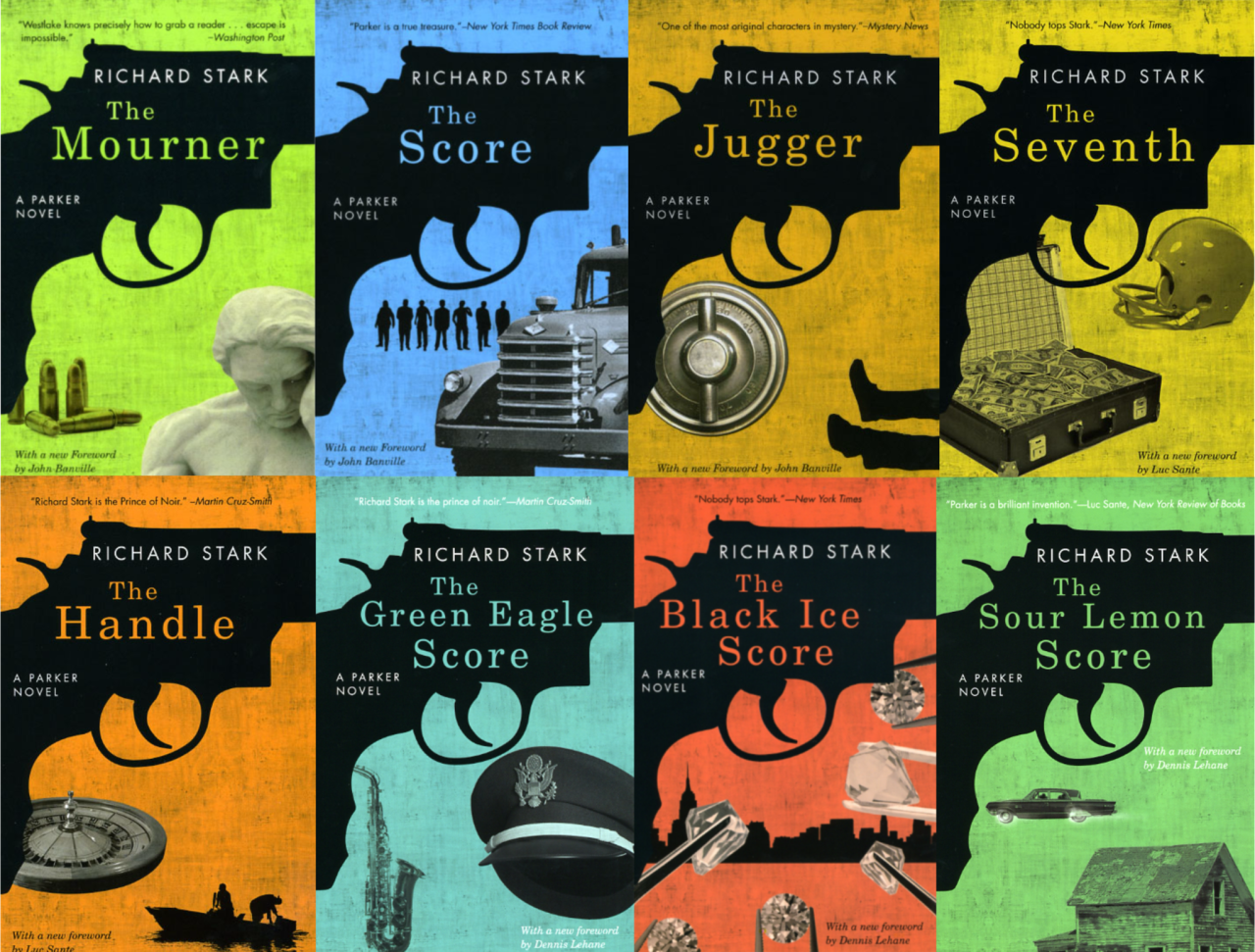
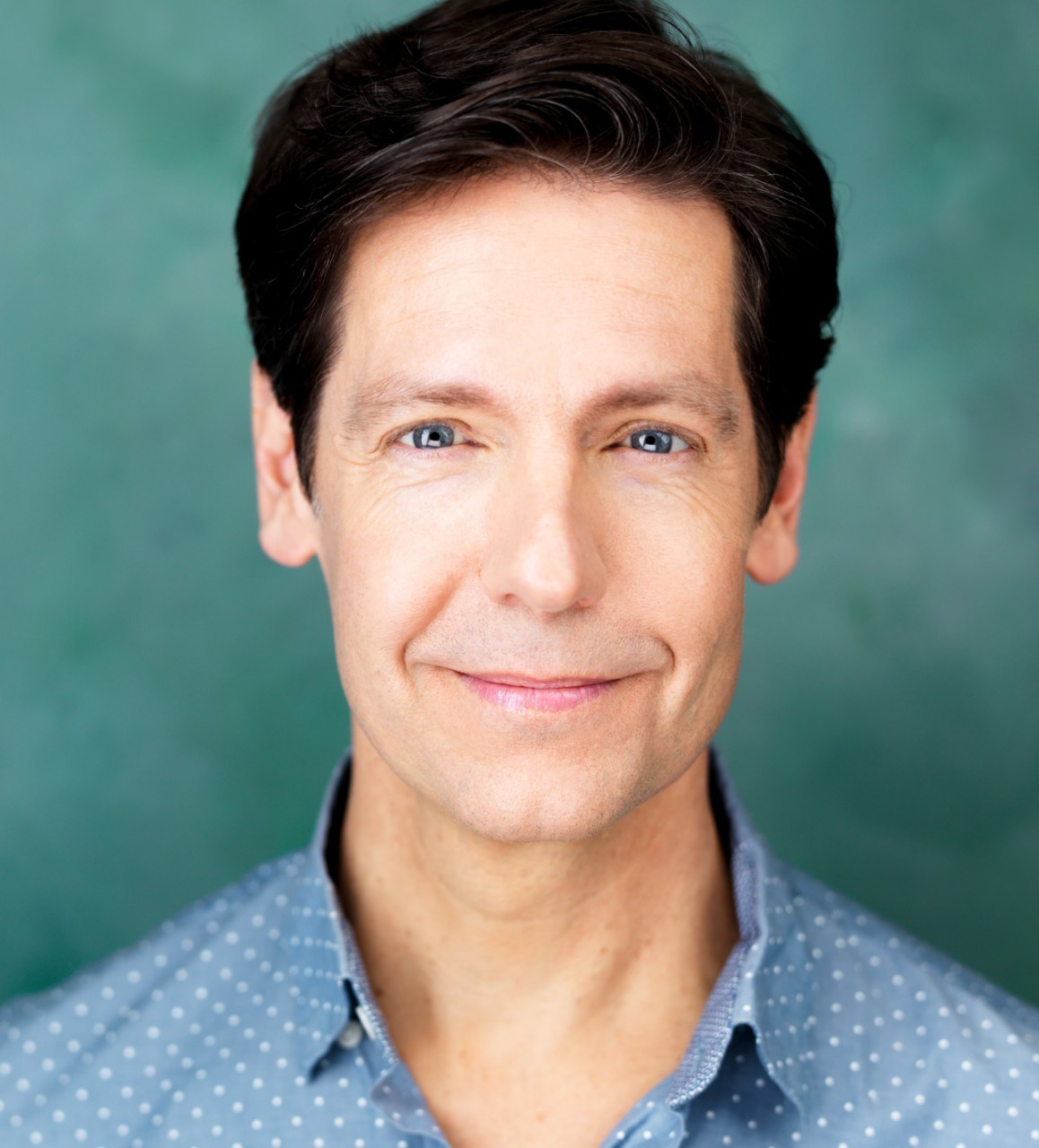
Tough Business recently had the great pleasure of interviewing actor, director, and audiobook narrator Stephen R. Thorne. Stephen has narrated several of the audiobook versions of the Parker novels published by the University of Chicago Press, and he kindly joined us for an insightful chat about his acting choices, the process behind the recordings, and his thoughts on the characters.
1) You've narrated nine out of twenty-eight books in Richard Stark's Parker series, were you at all familiar with the novels beforehand? Have you read the other books in the series?
I was not familiar with Westlake (or Stark’s) work before recording the audiobooks. Actually the very first book I was hired to do way back in 2008, I think, was Somebody Owes Me Money by Donald Westlake. I really enjoyed it primarily because of his writing style. It is direct and colorful and has a distinct rhythm. And that book, if I'm remembering correctly, is in the first person, so really clicking in with the voice of the character was a lot of fun. I haven't read all the Parker books — I have to confess that my reading habits changed once I started narrating full-time — essentially I started reading less — mostly because I would spend many hours reading out loud. But from that first book, I became a fan of his. Revisiting them in this interview makes me want to start a Parker summer reading challenge.
2) Can you talk us through the process of narrating an audiobook? Are there many similarities to acting?
Great question. With fiction, the first step is to read the book. I want to understand the plot, the people and the overall feel: is it a thriller? Is it dry? Is it fun? Then I think about voice and/or voices. If there is a specific accent needed I will do some research if I am not familiar with it. In terms of the relationship to acting on the stage, when I began narrating audiobooks, I thought that it was going to be much more performative — perhaps what I might imagine doing dialogue for an animated movie might be like. But I learned quickly that sustaining a level of consistency for many hours at a time required more stillness. And learning to let the mic do more work was an adjustment.
I am primarily a theater actor so I can be as loud as I need to be, but that is not necessary for this work. I will also add that the best narrators don't get in the way of good writing. If the words are full and precise, you try to let that be the guide and not overdo it with lots of acting choices to try make it more interesting. Trust good writing. Plus listening to an audiobook is a very different experience than watching a play. There is, however, a great deal of overlap with the technique of acting — articulation, clarity, trying to lift sentences up so there is a sense of forward motion, trying to make subtle choices that help the listener understand which character is talking. And, sometimes, you just get to have fun with a character.
3) Some of the Parker novels you've worked on have a pretty large cast, and we've especially enjoyed your interpretation of Parker himself. How do you decide what a character should sound like?
What I find kind of funny is that for a while I was doing a number of the hard-boiled books, and I am so not a hard-boiled person — I am more of a Grofield type. And this may not be the niftiest sounding answer to your question about Parker, but when you've got a central character — especially in a series — I think it's best that they sound close to your own voice, no accents or characterization. I think it helps to ground the character. That said, Parker is a man of few words, very direct, no-nonsense, likes to get his work done and not linger for social hour. So I imagine that version of myself, if that makes sense. Again, the writing is so good — he has such a good handle on his character — that it makes my job easier. In terms of other characters, sometimes I just make a gut choice based on something in the words or a description of the character. And I will start simple: old or young, fast or slow, high pitch or low. From there, I may try to model it on the sound of another actor that I am familiar with. I will say a big challenge with these books is the sheer number of hardened guys! I felt like I started to run out of 'tough guy' voices. That's why Grofield or anybody else with a distinct vocal characteristic or rhythm is a blessing. I have made the mistake in the past of using a 'gruff' or 'raspy' voice for characters that talk a lot, and the downside is that it is very tiring! Hard to sustain. I do have a distinct memory of narrating The Score and working very very hard to keep track of everyone and make them distinct. Hoo-boy, that was a wild ride. But in those days I was working with an audio engineer, so at least I had someone to help when I got lost.
4) You perfectly capture this lightly comedic, very charming tone that just embodies Alan Grofield, the part-time thief full-time stage actor appearing in The Score and The Handle. Being an actor yourself, do you find any part of the character to have resonated with you? Was there something specific that made you settle on this particular voice for Grofield?
I love this guy! And, yes, of course I relate. He has a flair with everything including his phrasing and his overall perspective. Such a great counterpoint to Parker. And light is a very useful descriptor. Again, in counterpoint to the heaviness of Parker. Grofield strikes me as very malleable — able to shift easily to deal with unknowns or tricky situations or personalities. I also get the sense that Grofield enjoyed life — that he's having fun and savoring his experiences in a very different way than Parker. There is also a quality about actors; this incredible adaptability that seems well suited to, well, the criminal life as it is presented in these books. To take that further, the planning of the job is like rehearsal, there is a whole cast of characters that has to be assembled and a lot of personalities to be navigated, then comes the performance itself — the actual heist — and the energy is now ultra-charged and you have to navigate unexpected events, but actors thrive on that energy. And it all ends with the opening night party — or the sharing of the loot and a celebration of a job well done. Hm. Maybe I'd be a good bank robber…
5) Stark's work is renowned within the crime genre for its very distinct style, his short blunt sentences especially. How does that translate to reading out loud, and is maintaining the rhythm of an author's work something you're aware of while recording?
My appreciation for Westlake/Stark's work came from that first book I mentioned earlier, but not having read a lot of crime fiction, and (at that point) not having done a lot of audiobook work, I didn't really appreciate how good he is/was. You mention rhythm. That is everything, especially when narrating. Once I began working on other books — and finding myself struggling to find a rhythm — I realized how much the flow is essential to the Parker books. Yes, they are short and direct — they move really well. I'm being a little litcrit here, but maybe that's reflective of Parker's experience of the world, how he has carved out his own way to navigate the very specific and high-stress and risky terrain he inhabits. He is no frills, wants to get in, do his business and get out because lingering excessively is dangerous. Listening to some of them again made me really appreciate that and want to record more of his work!
6) Do you recall any particular moment in the novels that you especially enjoyed getting to act out?
Anytime there were more than two people talking was always fun — it felt like a scene in a play. It is my hope, always, to make the characters sound distinct and still be in the world of the book… and I am a cheeseball. I love playing with all of these characters who live outside of "polite" society, pretending to be part of that group and making them come to life was a blast every time.