tough business:
a parker site
Pride Month Special: A Response to a Response and the Denial of Subtext
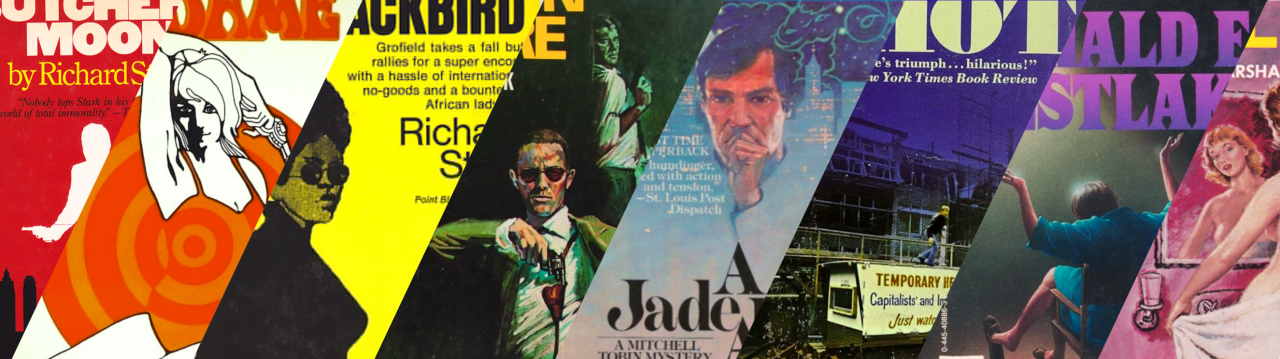
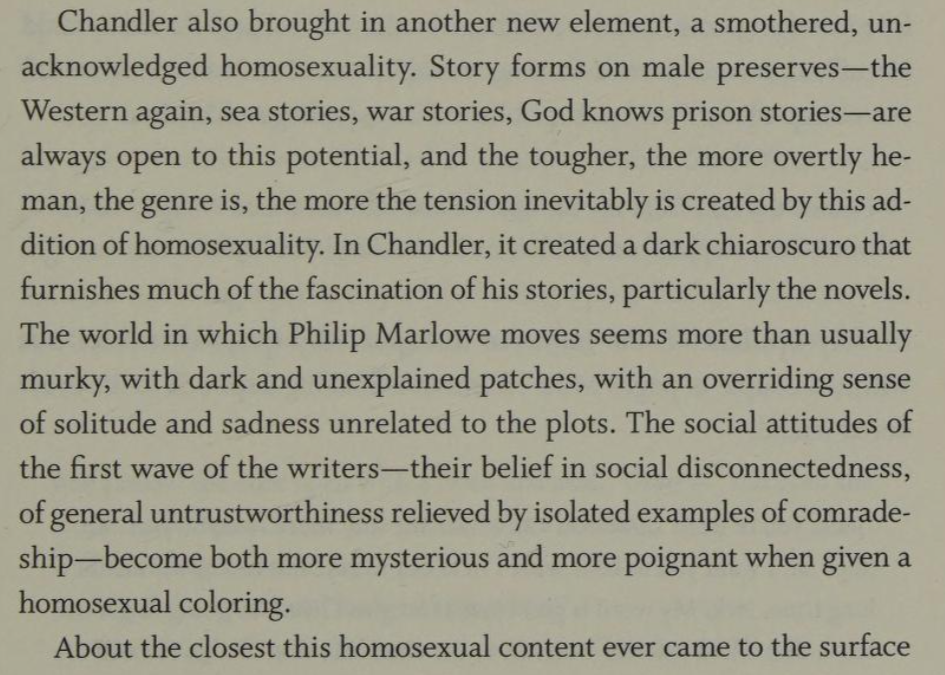
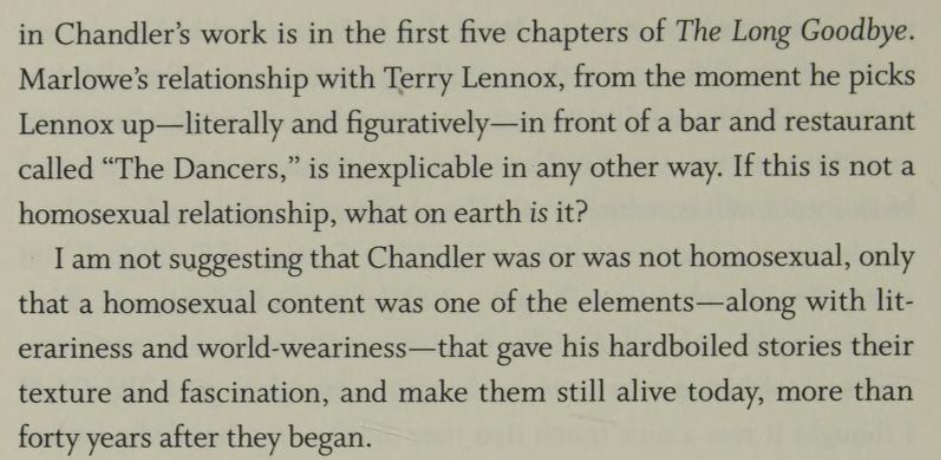
Donald Westlake’s essay “The Hardboiled Dicks”, a meditation on the crime and mystery genres that had initially started out life as a lecture at the Smithsonian Institute on May 13th 1982, first saw print in The Armchair Detective Vol. 17 #1 (Winter 1984). Westlake approached the subject as a man who had been on both sides of the looking glass, as reader and writer. Having read enough and written enough and researched enough to be considered an authority on the topic at the hand, Westlake’s essay is one of the most significant — and most underrated — analytic pieces on crime fiction from someone who had actually been there to see the genre grow and develop over a number of decades. Most notably, it is also one of the very few explorations of crime fiction on a historical basis to approach the subject of homosexual subtext both in a positive manner and as an undeniable staple of the medium.
A few months later, a response appeared in the letter column of The Armchair Detective Vol. 17 #4 (Fall 1984), and then a whole piece by Robert A. Baker and Michael T. Nietzel attempting to refute Westlake’s analysis was published in the Winter 1985 issue of The Armchair Detective, and another letter had poured in by the time the Fall 1985 issue hit the stands. It was a decidedly unfavorable reception. If most agreed that Donald Westlake’s essay had merits on all other points, the matter of gay subtext seemed to awaken an urgency in The Armchair Detective’s primarily straight male audience — their repulsion had to be expressed with immediacy. If the men behind these letters and essays felt they had to work within the boundaries of respect set by Westlake’s fame and reputation, it doesn’t seem especially unlikely that a more inexperienced writer would have gotten an even icier reply punctuated by harsher words.

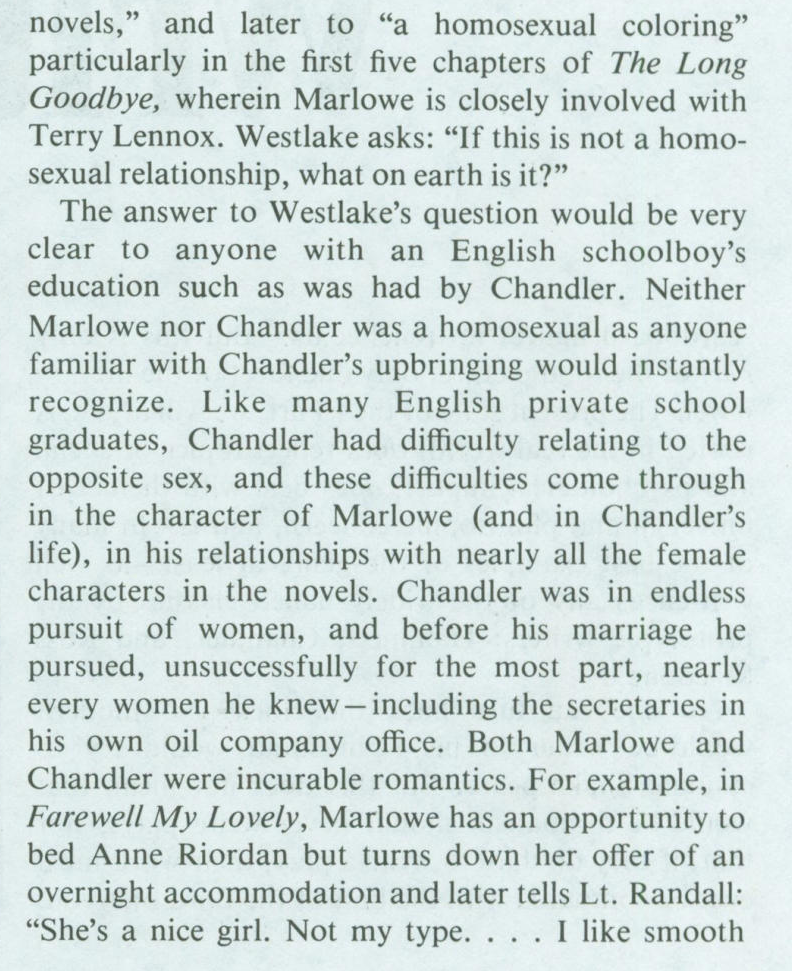

Excerpt from Baker and Nietzel's piece.


Letters from The Armchair Detective Vol. 17 #4 (Fall 1984) and The Armchair Detective Vol. 18 #4 (Fall 1985), respectively.
It is worth noting that this backlash did not exist in a vacuum, and the attitude presented here is not an outlier within the pages of The Armchair Detective. Literary critic Allen J. Hubin, who had inherited the “Criminals at Large” column in the New York Times from the late Anthony Boucher and who had founded this very magazine, expressed a similar sentiment in “AJH Reviews” — The Armchair Detective’s very own review column. Upon reviewing the seventh novel in the groundbreaking gay-themed Dave Brandstetter series by Joseph Hansen in the same issue as the aforementioned piece by Baker and Nietzel, Hubin blithely stated, “a good story, nicely moody and socially conscious, and — as is usual with this series — revolting homosexual bits are kept minimal.”

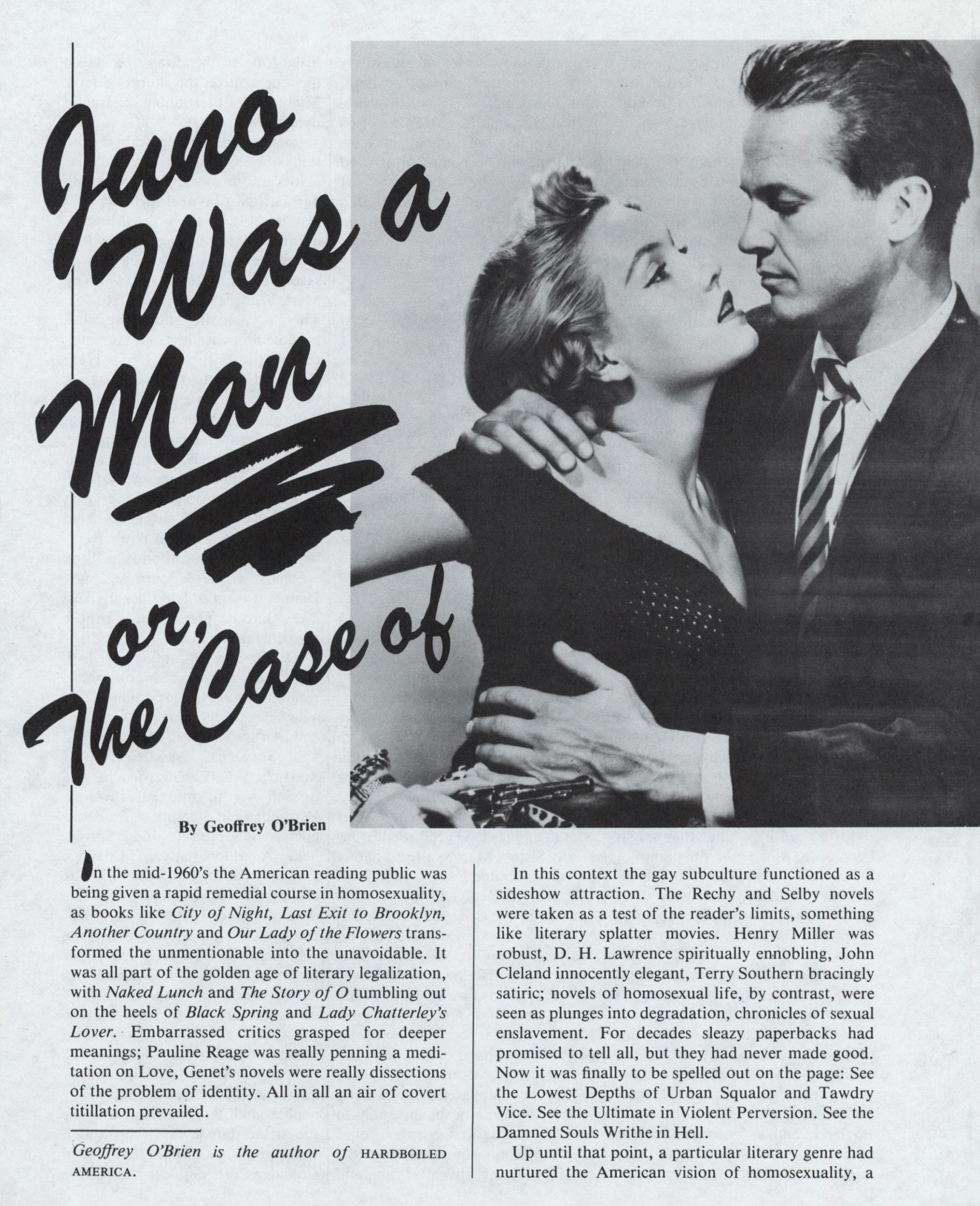
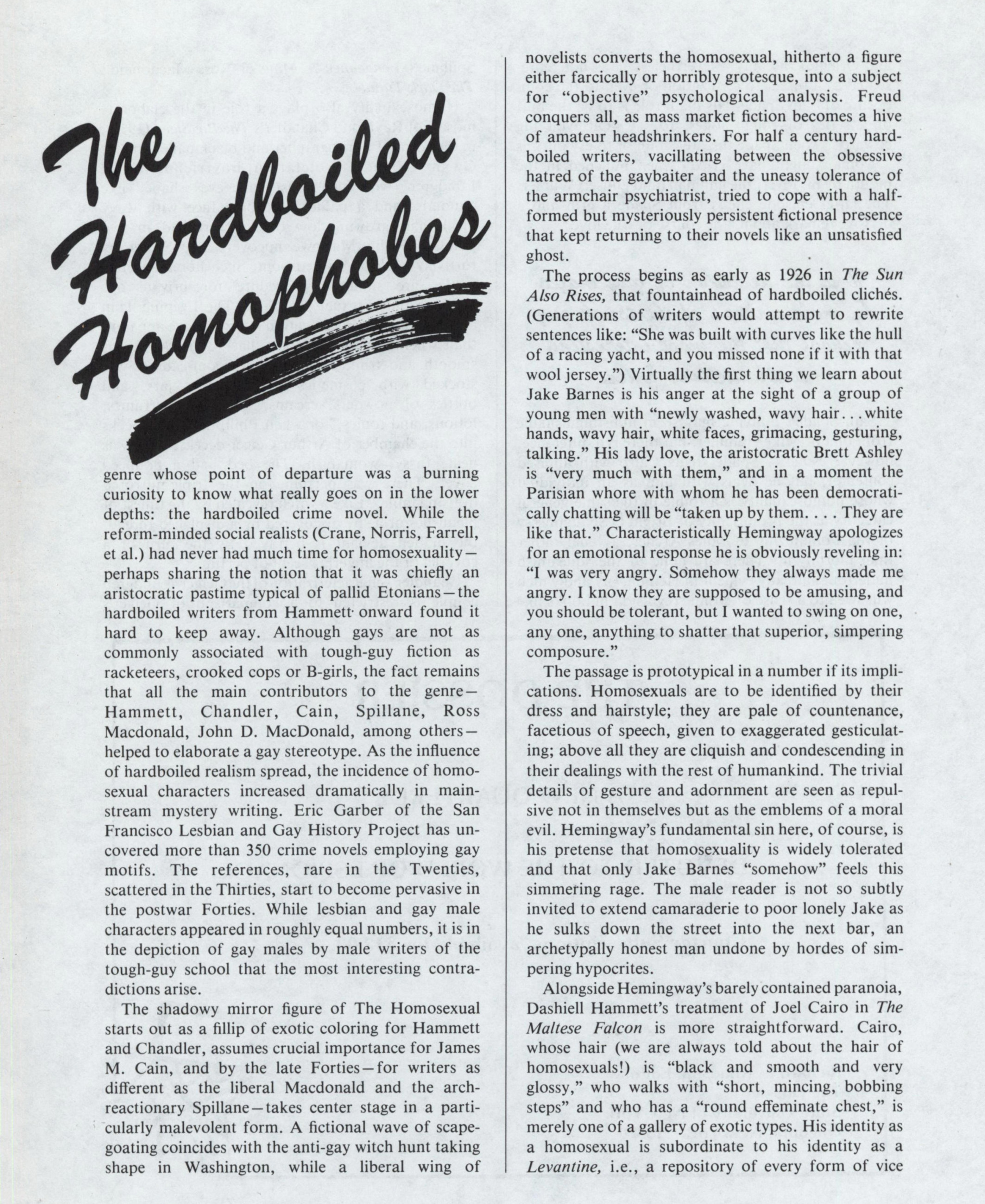
This isn’t to say that The Armchair Detective was a monolith, and no opinions or discussions to the contrary were permitted. The summer 1985 issue featured an article by Geoffrey O'Brien entitled "Juno Was a Man; or, The Case of the Hardboiled Homophobes", which outlined the gay stereotypes created and perpetuated by classic crime fiction, with examples taken from the works of Hammett, Chandler, Cain, and Spillane among others. O’Brien’s piece, although well-written and compelling, doesn’t seem to have made any particular waves, and that is where the major difference between his and Westlake’s essay arises. O’Brien wrote about what is clearly visible in the novels discussed, he acknowledged the stereotypes that were the stock-in-trade of hardboiled stories set within underworlds that straight readers would never know — he wrote about the pansies, the masculine lesbians with psychotic impulses, the deceitful crossdressers — but Westlake wasn’t interested in the one-off caricatures. Westlake proposed that Philip Marlowe himself experienced homosexual attraction.
More so, Donald Westlake’s piece is genuinely remarkable in its insistence that this variety of subtext is necessary to the genre; not just that it gives these books an air of verisimilitude as the walking stereotypes mentioned above do in the sense that they’re the inhabitants of a diverse and vastly-populated world but rather that the novels “become both more mysterious and more poignant when given a homosexual coloring”, that “a homosexual content was one of the elements — along with literariness and world-weariness — that gave his [Chandler’s] stories their texture and fascination, and make them still alive today, more than forty years after they began.”
To Westlake, homosexual subtext is entirely positive, it is necessary in the service of narrative depth, and it is downright inherent to “he-man” genres. But despite Westlake’s standing in the crime fiction community, any claim that a protagonist like Marlowe could be something other than straight was clearly perceived as an insult by the readers and contributors of The Armchair Detective. Stereotypically gay villains are one thing, but obvious subtext must be explained away when it comes to tough-guy protagonists — an English schoolboy’s upbringing as an ineffectual explanation for the torch decidedly American Marlowe carries for Terry Lennox surely crosses into the realm of wishful thinking. Even Geoffrey O'Brien erroneously claims Raymond Chandler “never tackled the subject [of homosexuality] in fiction again” beyond The Big Sleep, as though The Long Goodbye alone doesn’t feature a variety of both textual and subtextual gay characters.
Allen J. Hubin’s assertion regarding “revolting homosexual bits” is really only an especially outspoken expression of the homophobia that permeates spaces dedicated to crime fiction to this very day. An analysis of the subtext present in Donald Westlake’s writing provokes much the same reaction now as this discussion of Chandler’s work had back in the 1980s, despite the fact that Westlake’s beliefs most certainly apply to his own novels and a strong case can be made for authorial approval if not necessarily always intent when exploring the compelling dynamic between Parker and Alan Grofield in the hardboiled novels written under the Richard Stark name or Mitch Tobin’s unending grief for his partner in the Tucker Coe mysteries. It’s clear to see that Westlake dealt most heavily and purposely in tension between men when working within these male-centred genres as he had personally defined them in his essay.
“The Hardboiled Dicks” remains a highly significant piece of critical analysis that singles out Donald Westlake as a staunch ally far beyond the beliefs held by his peers and audience of the time. The vast majority of Westlake’s work features gay characters and themes, from Sally (1959) to Pity Him Afterwards (1964) to The Sour Lemon Score (1969) to A Jade in Aries (1970) to Sacred Monster (1989) among a multitude of other examples stretching in both chronological directions across his long career, and he’d never once settled for one-dimensional stereotypes.