tough business:
a parker site
In Defence of Grofield: Stark’s Non-hero
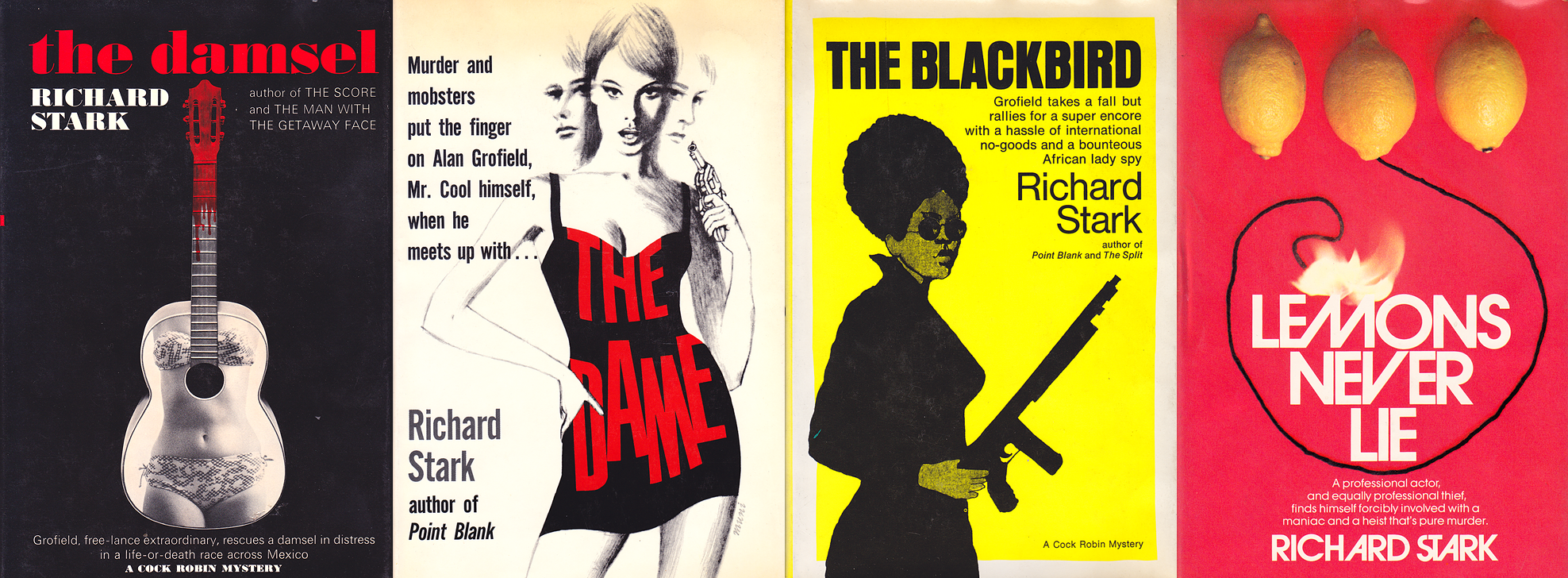
The four Alan Grofield novels have often been looked at as an addendum to Richard Stark’s Parker series, an afterthought for readers to come to only once they’d finished the sixteen hardboiled novels that had made the author a household name in the world of crime fiction. Why these books have been relegated to the status of lesser efforts can be attributed to several factors, all of which we’ll take a look at in turn, but the facts remain that the Grofield novels were released concurrently with the Parker ones, they mark the first hardcovers of Stark’s career and they’re his only spin-off series — in fact, Donald Westlake’s only spin-off in a bibliography consisting of entries in the hundreds. By all accounts, Grofield’s adventures should at the very least be objects of interest to those invested in Stark’s complete canon, but in the decades past their publication, their reputation has only deteriorated.
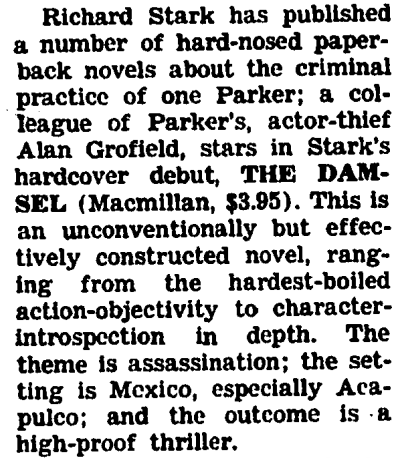
It is worth noting that the novels were well-received upon release, with the sole exception of Lemons Never Lie — a reverse of the present state of things. Reviews published in the New York Times from well-known critics like Anthony Boucher [1], one of the founders of the Mystery Writers of America organization, and Allen J. Hubin [2, 3], historian and creator of leading crime fiction magazine The Armchair Detective, let us know that Stark’s twists and turns and genre experiments in Grofield’s first three solo outings were very much enjoyed by audiences at the time. On the other hand, famously hard-to-please critic Newgate Callendar [4], a pseudonym of author Harold C. Schonberg, declared the fourth and final Grofield novel somewhat rote for all the same reasons that it is praised today.
For those unfamiliar with the novels in question, they can be described as follows: The Damsel is a lightly comedic take on the adventure genre where a wounded Grofield ends up on the run in Mexico alongside the spirited Elly Fitzgerald, who’s got her own tangled web of secrets to contend with; The Dame is a locked room mystery in the Agatha Christie tradition where Grofield has to solve a murder to prove his own innocence, The Blackbird is a James Bond-esque spy story in which Grofield gets caught up in foreign intrigue after a job with Parker goes awry and a government agency offers him a deal in exchange for his freedom; and finally, Lemons Never Lie is a return to form in the shape of a typical heist story. It is the latter that is vastly preferred by readers everywhere.
There do seem to be, indeed, several factors at play in the perception of these novels. The first is temporal: most of the current generation of Parker readers had had access to the 2006 Hard Case Crime reprint of Lemons Never Lie the minute it had come out. In fact, it’s quite apparent that the Hard Case Crime edition in question had either served as an introduction to Stark altogether, or at the very least to Grofield as a character, for a large number of fans presently active in online spaces. Despite the initial three novels now being back in print thanks to the efforts of the University of Chicago Press, they have not had the same success nor are they viewed with the same degree of accessibility by the general public.
It is also possible that the disappointment with the initial three novels stems from the fact that they are the ‘wrong’ genre. Premier Parker site The Violent World of Parker, a mainstay of Stark fan culture for over a decade now, tellingly states on their page for the final Grofield novel, “Lemons Never Lie is a first-rate Richard Stark novel. It’s a shame that, after finally writing a Grofield solo adventure that all of his readers would enjoy, Stark never wrote another. Maybe he decided that he could never do better than this.” [5] This is not to disparage anyone who has and does enjoy Lemons, but rather to investigate why that initial trio of books has so resolutely been pushed aside in modern times. There had been other genre experiments in Stark’s output before the Grofields ever came along, the early half of the Parker series clearly tends towards shifts of this nature — The Jugger is a first-rate murder mystery, The Seventh is a revenge thriller, The Handle (from which The Damsel was born) alternates between espionage and heist, and later novels all encompass the many varieties possible under the header of the crime genre.
And yet the Grofield novels, where such experimentations are more evidently spelled out, lack the same appeal for a large part of Stark’s audience. There are key differences in the author’s approach between Grofield and Parker, and it is as simple as stating that Grofield is not Parker nor does Stark ever intend him to be.
Parker stories almost always take place in an urban setting, the character himself is made nervous by wide-open spaces and prefers hotel rooms to Claire Carroll’s house upstate; the city is, as a matter of fact, a vital element of these heist stories as it was in the claustrophobic noir films of the 1940s and ‘50s or the hardboiled literature of Hammett and Chandler. We are often led to understand that Parker hails from New York City, and that’s where he’s most comfortable. His point-of-view chapters often have him remarking on architecture, and Stark has presented final confrontations everywhere from offices to construction sites — all undeniable signs of society’s march forward, of the industrialization represented by entities like the Outfit, of Parker’s status as one of the few free agents left standing.
By contrast, the Grofield novels are all about wide-open spaces. While they often take place in exotic locales, the protagonist rarely gets to enjoy his surroundings. In Mexico, he’s primarily on the run and a great big chunk of The Damsel takes place on the road. In Puerto Rico in The Dame, he’s repeatedly lost in the jungle. In Quebec, Grofield is stuck in the freezing cold outside a ski lodge and has to spend a night out in the snow, although The Blackbird does briefly allow him the amenities of Château Frontenac. Even in Lemons Never Lie, Grofield runs his barn theater out in rural Indiana. In effect, the urban trappings familiar to the genre Grofield originates from are all but eliminated in his solo outings and may be disorienting to those expecting a by-the-book crime story, but that doesn’t wholly account for the fact that the same can be said for that final beloved novel, except that it takes place in a milieu more familiar to American readers and is far less diverse than its predecessors.
That brings us to the question at the heart of this investigation: is it possible that the first three Grofield solo novels do not appeal to Stark’s usual readers because they were written with a different audience in mind?
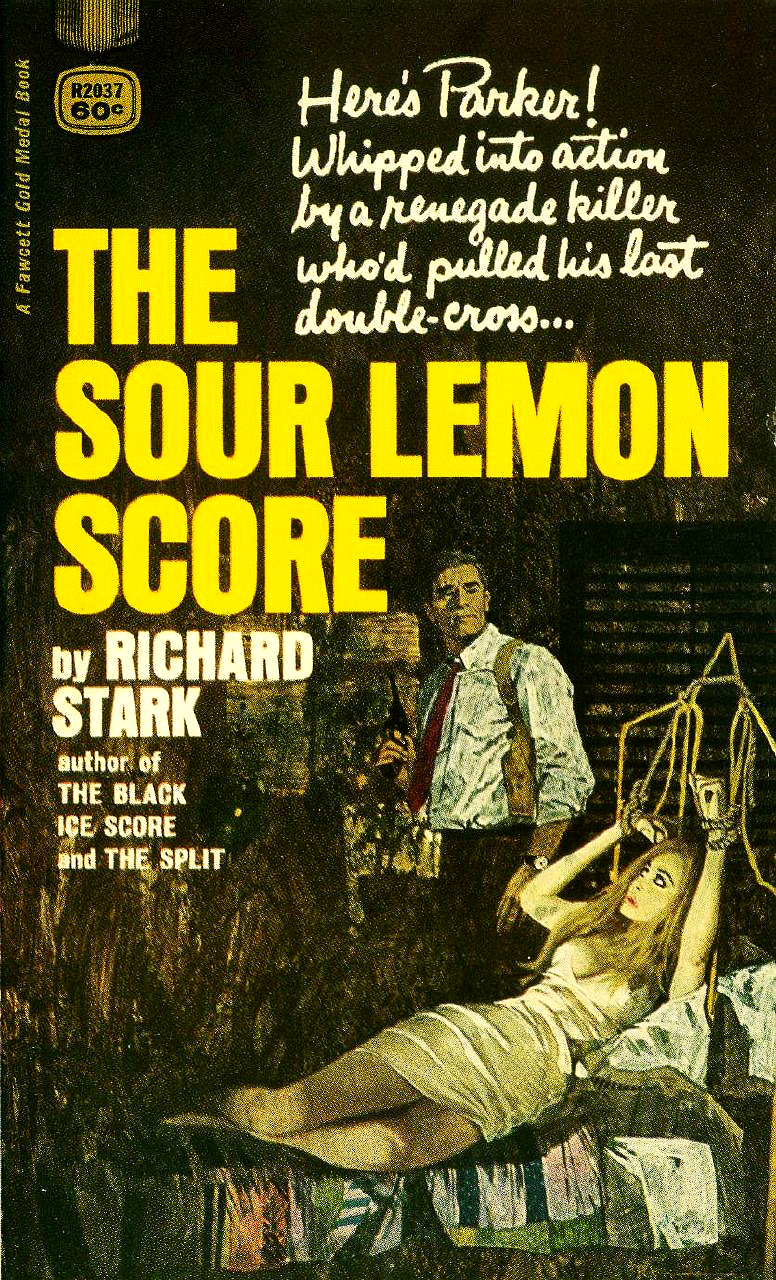
Donald Westlake’s entire literary career has been uniquely dedicated to diversity and social causes to a much more remarkable degree than the work of any of his contemporaries. On a baseline level, the world his characters inhabit is always populated by as many different people as you’d see walking down the street of any major city in the Western world, it is primarily where the sense of verisimilitude that had charmed so many comes from. At a closer glance, he’d written a complex cast of Black supporting characters in The Black Ice Score in 1968, a gay couple in the same line of business as Parker in The Sour Lemon Score in 1969, a heartfelt and sincere exploration of New York’s gay scene in 1970’s A Jade in Aries, a canonically bisexual Black main character in Bank Shot in 1972, to name just a few examples out of his immense catalogue. It’s not especially unlikely that the books starring a flamboyant actor-turned-thief, theatre already being a subject close to Westlake’s heart, may have intentionally leaned away from the primarily male readership the Parker books had garnered.
The fact that these are the first hardcovers published under Stark’s name lends credence to this line of thinking, Westlake himself having once commented on the publishing habits of the industry in a 2001 interview with Bookreporter: “If it weren't for received ideas, the publishing industry wouldn't have any ideas at all. When I was first being published, in the ‘60s, an article of belief in publishing was that women bought hardcovers and men bought paperbacks. This was demonstrable nonsense, but since everyone believed it, and they all knew they were all smart and knowledgeable, it must be true.” [6]
Hence the possibility that a series of novels initially published in a hardcover format might very well be interested in pursuing a female, or at least non-traditional, audience — if nothing else, Westlake would have been keenly aware of how publishers would market these books. While Parker’s stories are plenty diverse, the character himself holds no real prejudices expected of a man of his time. He’s an outsider, and an unspoken sense of understanding with other outsiders permeates the way Parker navigates society. To that extent, Stark found a unique opportunity in Grofield, that of exploring messy, imperfect, sometimes ugly humanity in a way no one else had on a mainstream level with a male protagonist in that era and genre.
If the female characters in Parker novels are well-written and compelling, they do still seem to have stepped out of the pages of pulp fiction. They are often cold, self-contained women with a capacity for cruelty and betrayal. On the other hand, the women in Grofield novels are decidedly ‘modern’ in the Howard Hawks screwball comedy model. They’re headstrong, vivacious, confident, and always co-protagonists to Grofield. The importance of these female characters to the narrative cannot be overstated; Elly in The Damsel and Vivian in The Blackbird both drive the plot forward, while Grofield’s conflict with the seemingly virginal Patricia in The Dame contributes greatly to the exploration of sexual themes — the sex comedy laying beneath the locked room mystery veneer.
In many ways, The Dame exemplifies the quintessential Grofield novel, and demonstrates just how atypical of a male character Stark had constructed. The book opens with Grofield brought to a remote house in the Puerto Rican rainforest under questionable pretenses, where he’s immediately deeply offended when he thinks Belle, the lady of the house, is proposing that he be employed as a sort of gigolo. She replies, “My God. Are you really that touchy?” [7] That sets the tone for Grofield’s demeanor in the book. He is that touchy.
He’s flamboyant, emotional, rarely practical, well-read, intelligent and clever but easily embarrassed. When a gay man flirts with him later in the novel, Grofield takes it in stride — they share the same speech patterns. When he’s locked in a cellar, he hugs himself for warmth, “he felt very very sorry for himself.” [8] He constantly makes literary references, he calls a suspect in the murder mystery “Humbert Humbert” [9] when he confesses to having dated a high schooler, or elsewhere keeps thinking that he’s living the plot of Alice in Wonderland [10]. When Patricia, the female lead, tearfully tells him about having had an abortion at a young age, Grofield cattily says, “isn’t it time you got over it?” [11] At the end, faced with certain death if he doesn’t speak up, he hesitates to offer his solution to the murder out of embarrassment that he might have gotten it wrong. These are all feelings and reactions unlike anything Parker’s ever experienced, certainly unlike what male protagonists are permitted within the trappings of genre fiction, and all that more captivating for it.
The Dame also introduces Onum Marba, a diplomat from a fictional African country named Undurwa. Grofield appreciatively notes, “what last evening's flowing robes had hidden was a strong and attractively muscled body. The arms, below the shirt sleeves, looked as hard as wood, sculptured from dark wood, almost black, with just a faint powdering of gray to keep it from shining.” [12] It says volumes about Grofield, but it also frames Marba as an equal to him, someone to be admired. Over the course of the story, he’s revealed to be more clear-headed than Grofield, intelligent and worldly and cautious. Marba becomes the only real recurring character in these novels, an unprecedented role for a Black character. While Elly does appear once more in the introductory chapter of The Dame after her time in the spotlight in the previous book, Marba’s role only grows in his next appearance in The Blackbird.
It is also in The Blackbird that we’re introduced to Vivian Kamdela, the most unique of the Grofieldian heroines. A special agent from Undurwa, Vivian initially mistrusts Grofield and never does warm up to him entirely but the push-and-pull of their dynamic hides real chemistry. Grofield as a character is in constant motion, in constant conversation with the changing world around him. Stark forces his protagonist to confront an unconscious racial bias in his interactions with Vivian and Marba; he places Grofield within the context of society, as a white American man from the Midwest, rather than allow him to exist outside of it like Parker. Despite occasional comic moments, The Blackbird does also contain one horrific act of violence in the lead-up to its finale that Vivian rightfully criticizes Grofield for. If the reader is made uncomfortable, it’s safe to assume that Stark wanted it so.
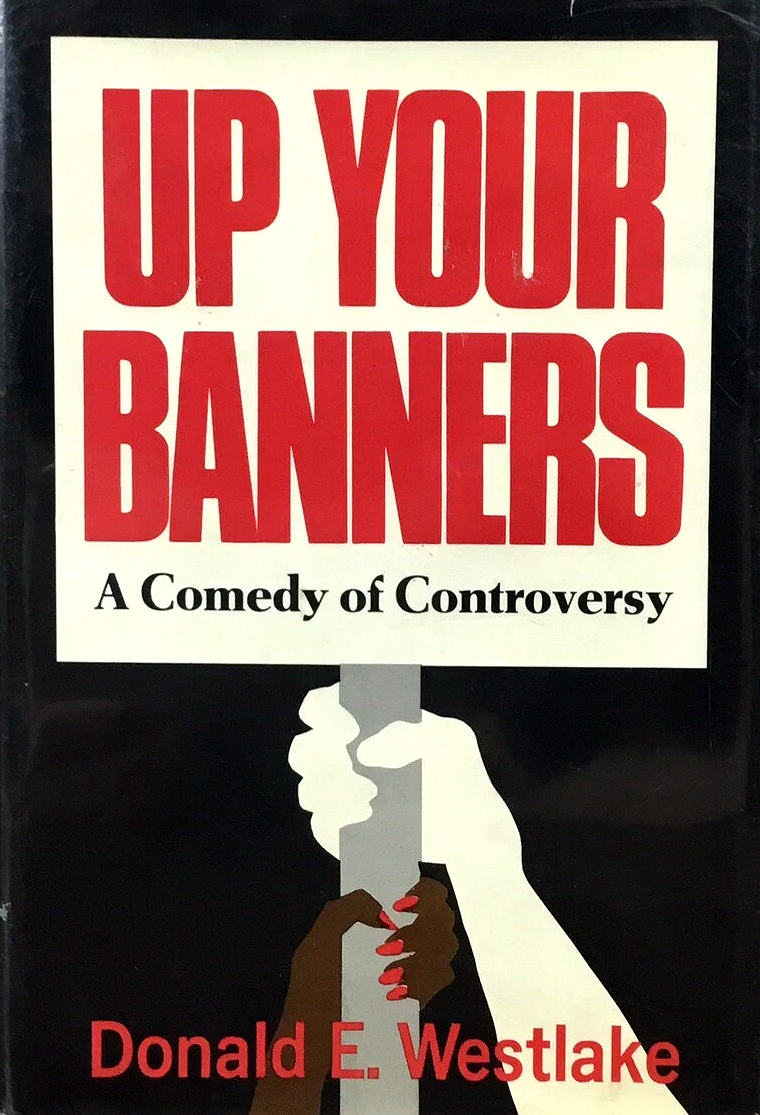
Despite their conflict, or perhaps because of it in true screwball comedy fashion, Vivan and Grofield do share a romantic carriage ride one night, and later sleep together. If it’s not the very first interracial sex scene in the crime genre, it’s certainly one of the absolute earliest at a time when the subject was not easily breached in fiction. Westlake had written about interracial relationships in Up Your Banners, also published in 1969, in much greater depth but Blackbird’s lighter approach cannot be ignored, it is still a significant milestone in popular literature — written roughly a year after the Supreme Court had ruled in Loving v. Virginia that laws banning interracial marriage were unconstitutional — that proves Westlake’s avid interest in the fight for civil rights. Vivian is not fetishized nor overly sexualized within the narrative, and though she eventually falls into the role of love interest, she’s treated the same as Grofield’s other leading ladies.
In fact, sex is a big deal in the Grofield novels, more so than with Parker’s repressed, instinctual approach where it is merely a physical need to be fulfilled or a way to work through the adrenaline from a job (“allowing his emotions the only release he permitted them”) [13]. The differences are threefold: borrowing from female-led genres like romance, a great deal of time and plot is spent on the relationships developing between Grofield and the female leads; these brief dalliances become vital to a comprehensive understanding of Grofield’s marriage to Mary Deegan as presented in the final novel; and finally, Grofield’s sexual orientation, although ostensibly subtextual, makes for an uncommon approach to his dynamic with women.
Grofield and Mary’s union is an unhappy one to begin with, despite the inexplicable belief to the contrary that seems especially popular with readers nowadays. Lemons Never Lie by itself shows their relationship to be as artificial as a stage play, but the divide runs even deeper. “Grofield had the look on his face that a man gets when he’s done something too stupid to be possible” [14] is what we’re told when the reality of having brought Mary along on the getaway after a heist really dawns on him in The Score; having married her some time in the two years before we see him again in The Handle, Grofield promptly compares Mary to Henrik Ibsen’s unhappily married Hedda Gabler and states, “my nosebleeds come from my wife.” [15] If that wasn’t enough, Grofield sleeps with all three of the female leads in his solo novels.
These aren’t just light flirtations, Stark writes them like legitimate romances — there is a genuine connection, and real potential. As brought up in the aforementioned contrasts to the Parker series, it’s impossible not to view this aspect of the Grofield novels as having come out of the romance genre rather than pulp or crime. It is equally impossible to deny that a reader approaching Lemons Never Lie, or indeed any of the Parker novels that feature Grofield, with the full knowledge of his extramarital affairs must surely see his relationship with Mary in a different light than a reader lacking in context.
That is the full picture Stark had painted, but that is not to say Grofield would be any happier with any of these women. They can keep up with him in a way Mary cannot, maybe they’re more urbane or they match Grofield’s sense of humor better, but like Parker, Grofield hasn’t found a way to be just ordinarily happy. In an unexpectedly vulnerable moment in The Dame, he agrees with Patricia’s assessment that he’s not husband material, and he’s been married at least three years by then. “I’m no place to live, but I’m a great place to visit,” he says [16]. It’s the most revealing thing Grofield’s ever said. Stark foresees no white picket fences or heterosexual domestic bliss for either of his protagonists.
And that paves the way for what many readers may find most unpalatable about Grofield. If approaching his sexuality as a done deal might seem presumptuous, any serious analysis of Stark’s work must contend with its subtext as it appeared within the era when it was written. A more in-depth look at Grofield as a bisexual character can be found here, but suffice to say that a flamboyant actor who calls men “dear heart” [17], quotes Oscar Wilde [18], and is repeatedly said to be typecast as “either a villain or some sort of sick weakling” [19] nears the realm of the stereotype. Westlake had previously written canonically gay summer stock actor Alden March in Pity Him Afterwards in 1964, the same year as Grofield’s first appearance, and whereas the twist of characterisation in Afterwards is that March is perfectly masculine and completely homosexual, it’s very much in line with Westlake’s sense of irony that the more effeminate Grofield would still enjoy female companionship.
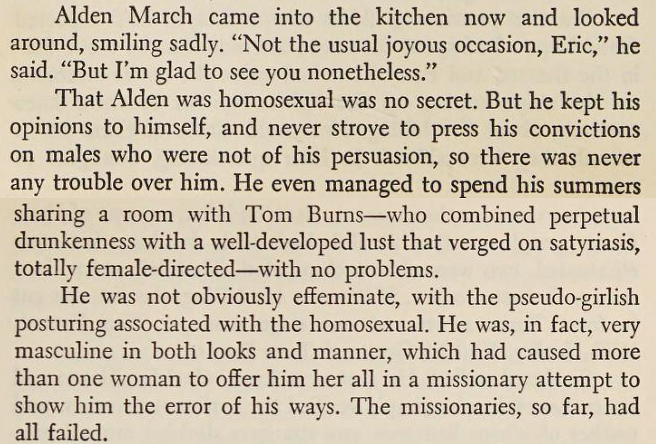
Even so, Grofield’s position as an object of desire does nothing to affirm his masculinity — he is not the macho ideal of the adventure hero, the tough guy from the pulps, the suave gentleman of the James Bond persuasion with a hundred pin-up models throwing themselves at him. Women like Grofield for the same reason men do: his eloquence, his sense of whimsy, his theatricality. It all comes down to just how much of a novelty he is juxtaposed with the men around him. For instance, one of the hired hitmen in The Damsel tells him, “you are a very funny man. I wanna keep you with me all the time, to make me laugh when I’m blue.” [20]
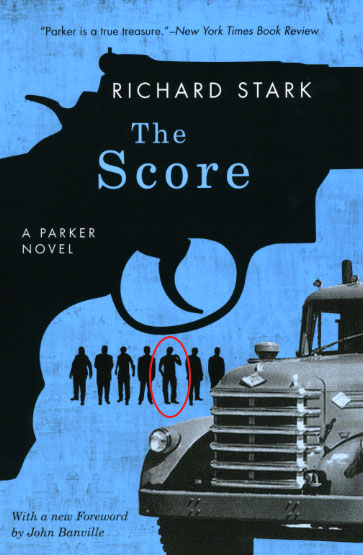
That sentiment exists out of universe, too. The reading of Grofield as gaycoded in some capacity is so prevalent that it is fully visible in every single adaptation or visual representation of the character, although it may very well be possible that the average Stark enthusiast is reacting to it purely on a subconscious level. Examples can even be found ranging anywhere from the blurbs on the backs of novels that repeatedly refer to Grofield as Parker’s “flamboyant friend” [21] to international editions and their translated titles — such as a 1992 Russian edition of Butcher’s Moon published under the title of The Kidnapped Freak (Похищенный фрик), where “freak” can also be used with pointedly homophobic connotations in the Russian language [22] even beyond the already offensive meaning of the word. Equally remarkable is the cover of the University of Chicago Press edition of The Score, where there can be no doubt that out of the seven silhouettes representing the heisters, Grofield is meant to be the one with a limp wrist and a cocked hip.
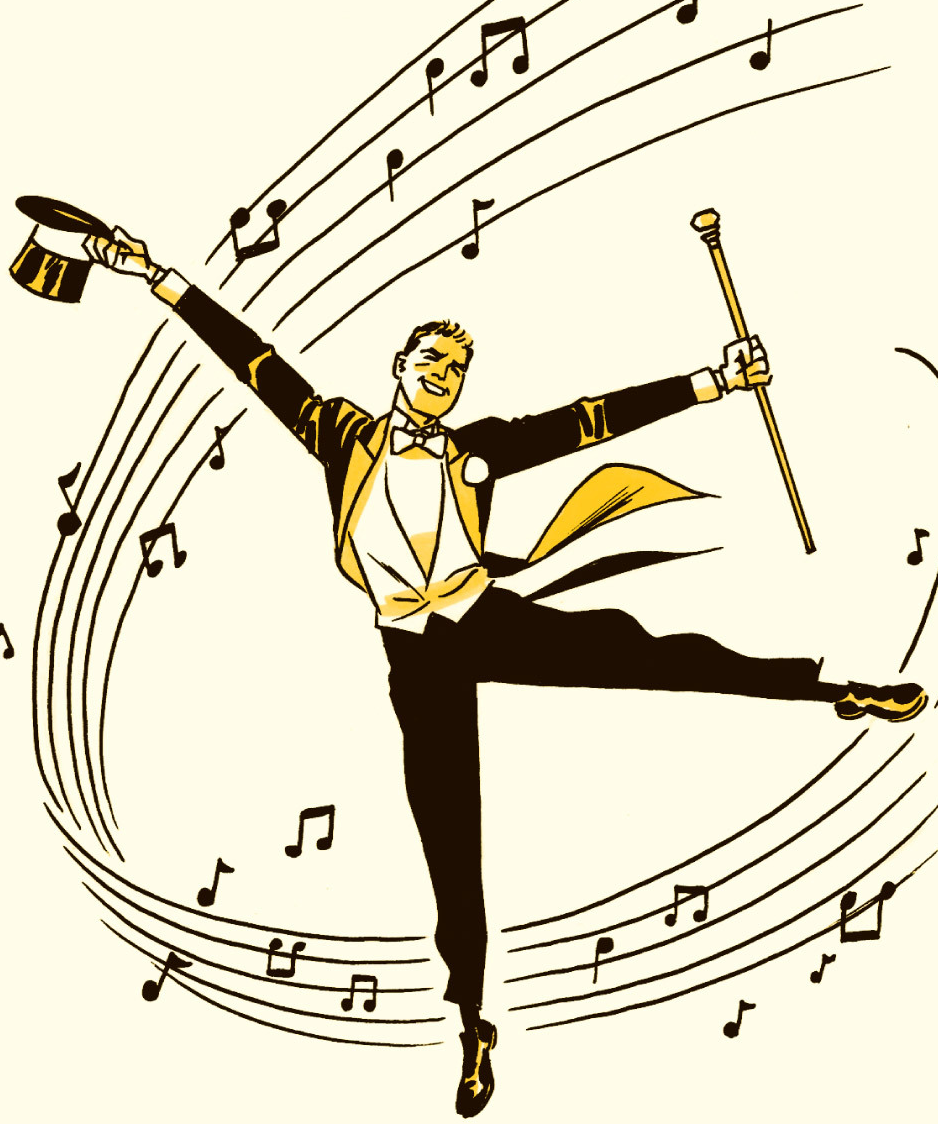
The trend continues: in the abridged reprint of The Handle published in the men’s adventure magazine For Men Only, Grofield’s flirting with Crystal is cut out completely despite this type of magazines often amplifying or outright inventing sex scenes, meanwhile his dialogue is kept intact and he still calls Parker “love” and a “wonder” [23]. In Mise a Sac (1967), the first film adaptation to feature Grofield, his encounter with Mary is also cut short and she’s left tied up in the woods rather than brought along at the end. In Darwyn Cooke’s graphic novels, Grofield’s point of view is a far cry from Parker’s grounded reality; Cooke practically creates fantasy sequences [24] in order to properly illustrate Grofield’s exuberant, melodramatic, highly theatrical manner.
Most recently, last year’s Play Dirty, the latest Parker film and the first to use Grofield’s name when adapting the character, eliminated romance altogether. In LaKeith Stanfield’s capable hands, Grofield’s unquestionably a professional but he’s also neurotic and flamboyant. That’s the key word regarding portrayals of Grofield, and it comes up again and again. Director Shane Black understands the character well, and uses to him to great comedic effect with an inclination towards camp — Stanfield lets out a high-pitched, cartoonish scream when Grofield’s hit by a car in the middle of the film — that’s easily explained by his perception of Grofield, as stated in a 2025 interview published on Tough Business: “he’s an actor, he’s flamboyant, he’s strange, he doesn’t care about other people’s opinions of him, and he can talk his way out of everything.” [25]
But these qualities might be precisely why general audiences have found it so difficult to connect to Grofield as protagonist, rather than sidekick. The fact of the matter is that characters like Grofield are very rarely the stars of their own stories, and qualities that are admirable in Parker are hardly even noticed in Grofield. For instance, if Parker is steadfast and determined to be his own man rather than to ever be bought or sold by the Outfit, then so is Grofield intent on remaining a stage actor in the service of art rather than finding fame and fortune in television or film. That is to say, Stark evidently saw them as equally strong characters but what drives Grofield forward appears to be incompatible with a primarily male fanbase that would deem only Lemons Never Lie, having finally fallen in line with expectations, to be particularly worthy of reading.
Nonetheless, the original trilogy of Grofield novels remain layered, exciting, complex works of literature that showcase Richard Stark’s versatility as a writer, and stand out as exceedingly unusual for their time in their appeal to readers who may not have ordinarily ventured into the crime genre. Alan Grofield is a rare kind of protagonist, and his existence isn’t just indispensable to Parker as a character but it endlessly enhances the series that forms Stark’s body of work.
References:
1. Boucher, Anthony. “Criminals at Large.” New York Times, May 7, 1967.
2. Hubin, Allen J. “Criminals at Large.” New York Times, February 16, 1969.
3. Hubin, Allen J. “Criminals at Large.” New York Times, October 12, 1969.
4. Callendar, Newgate. “Criminals at Large.” New York Times, May 30, 1971.
5. The Violent World of Parker. “Grofield: Lemons Never Lie (1971).” https://violentworldofparker.com/the-grofield-novels/grofield-lemons-never-lie/
6. Westlake, Donald E. 2001. Bookreporter. https://web.archive.org/web/20160515013937/http://www.bookreporter.com/authors/donald-e-westlake/news/interview-040501
7. Stark, Richard. 1969. The Dame, pp. 12. Cock Robin Mystery.
8. Stark, Richard. 1969. The Dame, pp. 38. Cock Robin Mystery.
9. Stark, Richard. 1969. The Dame, pp. 84. Cock Robin Mystery.
10. Stark, Richard. 1969. The Dame, pp. 13, 106. Cock Robin Mystery.
11. Stark, Richard. 1969. The Dame, pp. 122. Cock Robin Mystery.
12. Stark, Richard. 1969. The Dame, pp. 57. Cock Robin Mystery.
13. Stark, Richard. 1962. The Hunter, pp. 49. Pocket Books.
14. Stark, Richard. 1964. The Score, pp. 134. Pocket Books.
15. Stark, Richard. 1966. The Handle, pp. 47. Pocket Books.
16. Stark, Richard. 1969. The Dame, pp. 158. Cock Robin Mystery.
17. Stark, Richard. 1964. The Score, pp. 33. Pocket Books.
18. Stark, Richard. 1969. The Blackbird, pp. 105. Cock Robin Mystery.
19. Stark, Richard. 1966. The Handle, pp. 83. Pocket Books.
20. Stark, Richard. 1967. The Damsel, pp. 25. Cock Robin Mystery.
21. Stark, Richard. 2009. The Handle. University of Chicago Press.
22. Wiktionary. “фрик”. https://en.wiktionary.org/wiki/%D1%84%D1%80%D0%B8%D0%BA
23. Stark, Richard. 1966. “Table-Stakes Redhead.” For Men Only, September, 1966.
24. Cooke, Darwyn. 2012. Richard Stark’s Parker: The Score. IDW Publishing.
25. Black, Shane. 2025. Tough Business. https://toughbusiness.neocities.org/shaneblackinterview